Trigger ApexRouter workflows from your product.
Use API access to start governed AI workflows, pass context, stream execution state, pause for approvals, and retrieve outcomes from your own product, backend, or internal operations system.
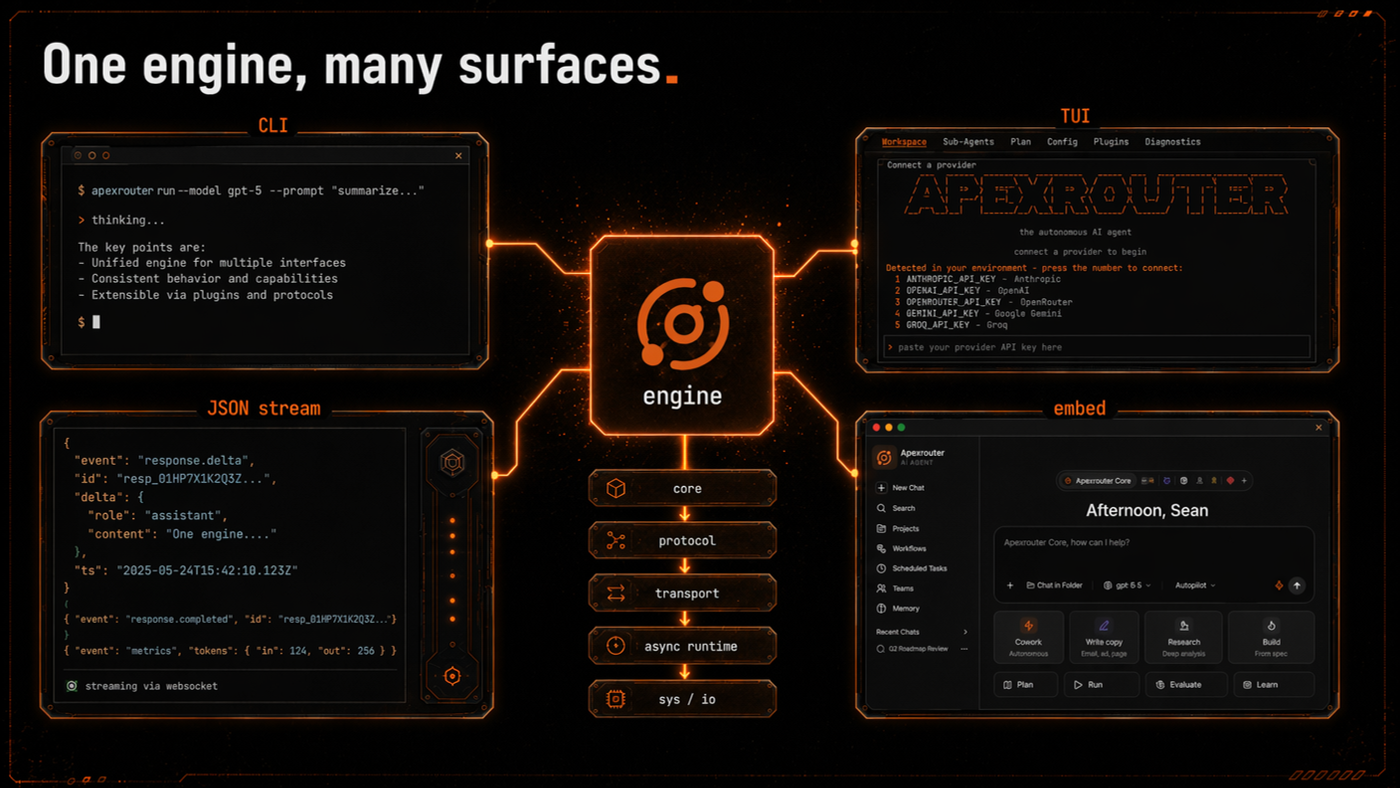
Your app stays the surface. ApexRouter coordinates the work.
Workflow triggers
Start approved workflows from a product action, backend job, support event, CRM update, or internal admin workflow.
Status events
Track started, running, waiting for approval, failed, retried, completed, and reviewed states without switching tools.
Governed context
Attach files, customer context, project memory, workspace rules, and user permissions before the workflow runs.
The control plane sits between people, agents, tools, and model infrastructure.
ApexRouter is designed as an orchestration layer: users define goals and policies, workflows attach context, agents operate inside bounded environments, model calls are routed through configured providers, and every meaningful action becomes part of the operational record.
Control plane
Workspace rules, roles, limits, approvals, and audit policies define what work can run and who owns it.
Execution plane
Agents, tools, files, and workflows run through scoped execution boundaries rather than uncontrolled local machines.
Model plane
BYOK providers, managed model endpoints, and customer-selected models can be routed according to cost, capability, and governance needs.
Agent operations need to last longer than a clean demo.
Teams need workflows that recover from tool failures, preserve state, avoid duplicate work, enforce budget boundaries, and surface review points before important actions. ApexRouter brings those endurance patterns into a SaaS operating layer for real team workflows.
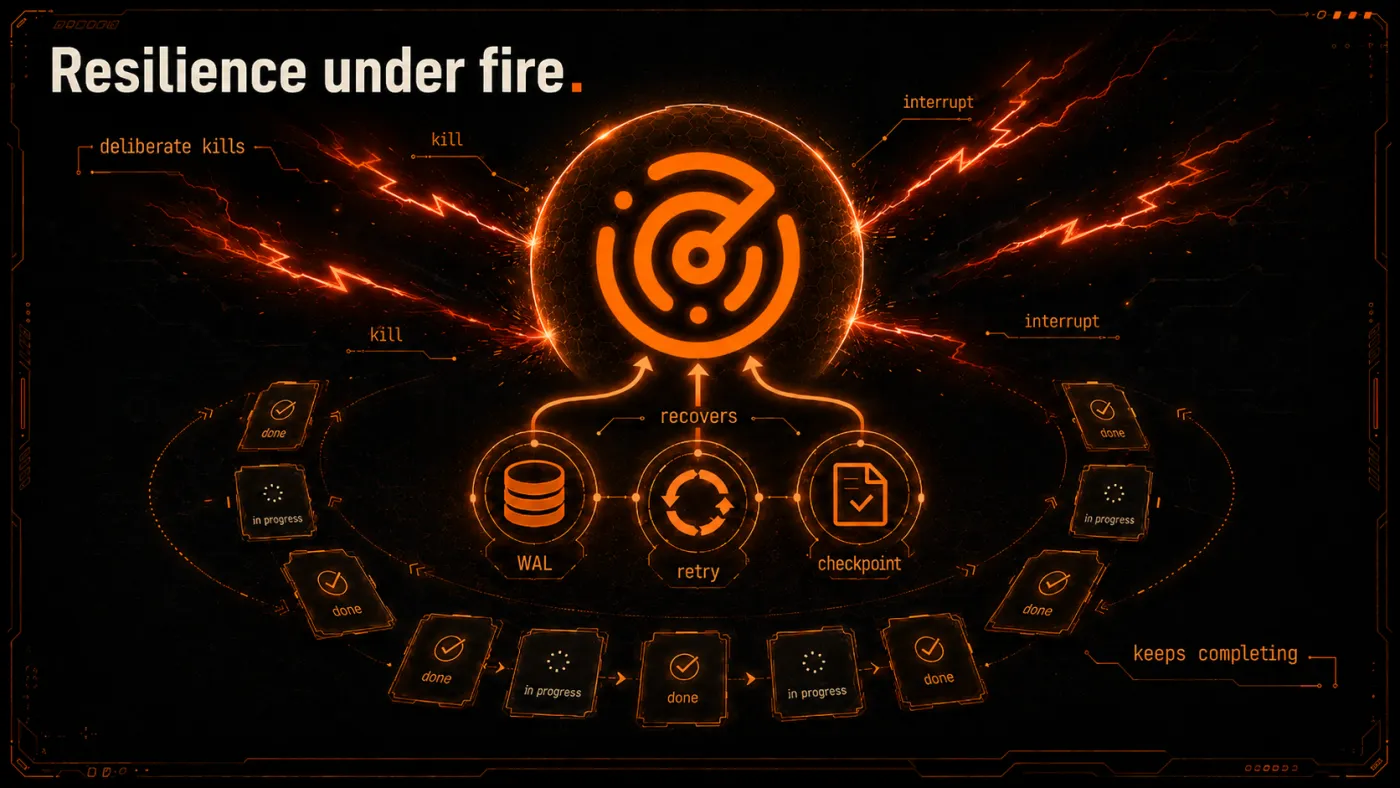
The goal is practical resilience: agents should survive normal operational friction without losing context, duplicating work, or hiding failures.